


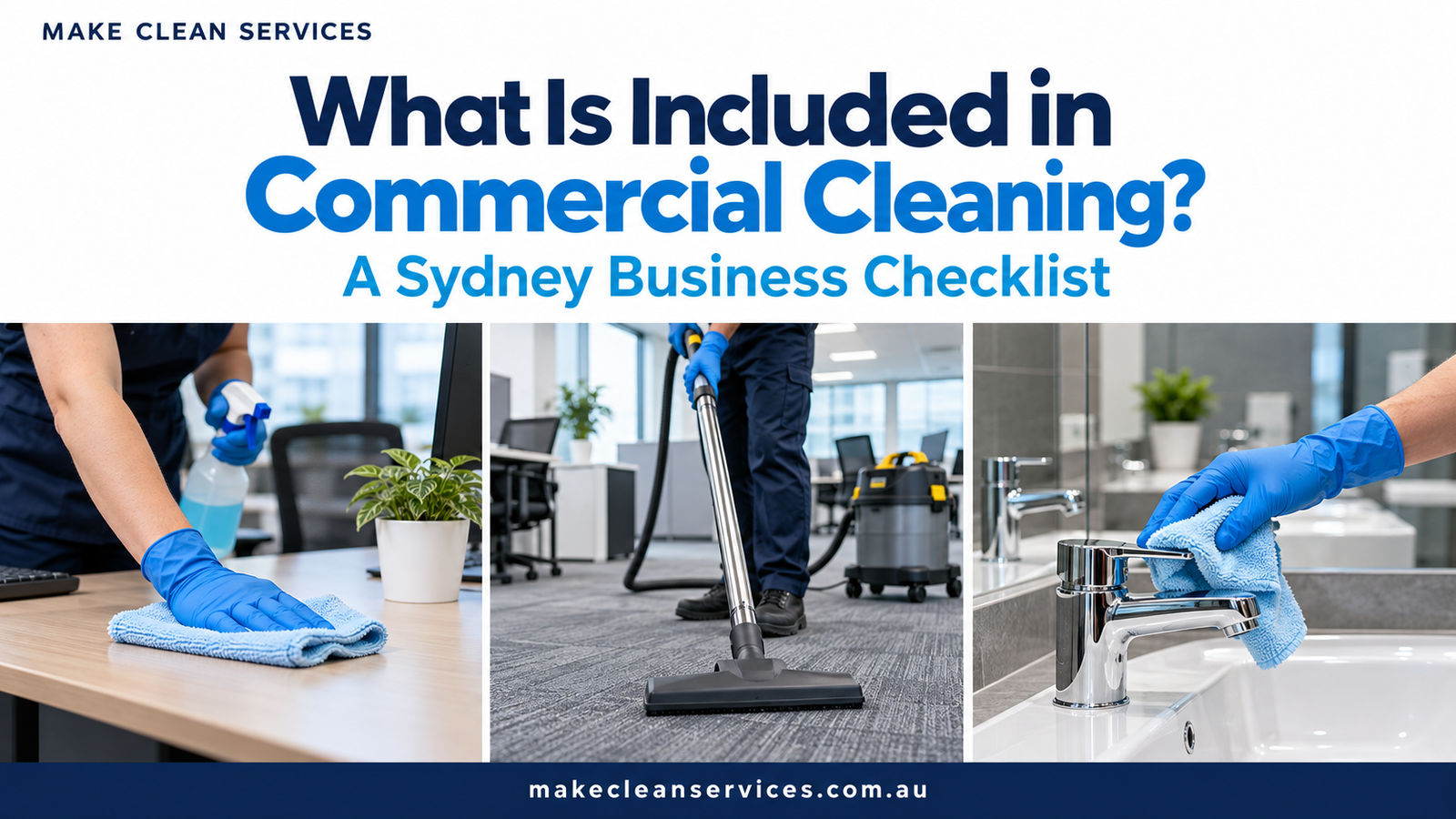
A clean workplace is not only about appearance. It also helps businesses maintain organised, functional and presentable spaces for employees, customers and visitors.
If you are comparing commercial cleaning Sydney providers, one of the first questions to ask is: what is actually included in a commercial cleaning visit?
A typical commercial clean may cover floors, work areas, shared spaces, kitchens, bathrooms, waste areas and frequently touched surfaces. However, the exact checklist depends on the type of workplace, its size, how it is used and the cleaning agreement in place.
Make Clean Services already provides customised commercial cleaning plans for different facilities rather than using one standard approach for every business.
So, while many businesses share the same core cleaning needs, every commercial site should have a cleaning scope that reflects how the premises actually operate.
What Does a Typical Commercial Cleaning Visit Include?
A routine commercial cleaning visit generally focuses on the areas that employees, customers and visitors use most often.
Depending on the workplace, the checklist may include:
- vacuuming and mopping floors
- dusting surfaces
- cleaning workstations
- cleaning kitchens and break rooms
- cleaning bathrooms and amenities
- emptying bins
- wiping high-touch surfaces
- cleaning entrances and reception areas
- cleaning shared meeting areas
- removing visible marks and dirt
- tidying common spaces
The exact tasks should be clearly defined in the service agreement.
For a commercial cleaning company Sydney businesses hire regularly, the most useful checklist is one that separates daily or routine tasks from periodic deep-cleaning work.
Entrance and Reception Area Cleaning
The entrance and reception area usually create the first impression of a workplace.
A routine visit may include:
- vacuuming or sweeping floors
- mopping hard surfaces
- cleaning entrance doors
- wiping accessible glass
- removing fingerprints
- dusting reception desks
- cleaning waiting areas
- emptying bins
- removing visible marks
These areas often receive high levels of foot traffic, so they may need more frequent attention than low-use spaces.
A professional cleaner should also make sure walkways remain free of unnecessary clutter while cleaning.
SafeWork NSW notes that workplace entry and exit areas should remain safe, clearly accessible and free from hazards. It also advises that tidy work areas can reduce slip and trip risks.
Workstation and Desk Area Cleaning
Office and workstation areas often collect dust, fingerprints and everyday debris.
Commercial cleaning may include:
- dusting desks
- wiping accessible surfaces
- cleaning desk partitions
- wiping cabinet exteriors
- cleaning shared surfaces
- vacuuming around workstations
- removing rubbish from bins
Cleaning should be performed carefully around personal items, computers and business equipment.
Some businesses may prefer cleaners not to move paperwork, devices or personal belongings. These expectations should be agreed before service begins.
This is why tailored commercial cleaning services Sydney businesses use are usually more effective than a one-size-fits-all checklist.
Floors and Carpeted Areas
Floors are one of the most important parts of commercial cleaning because they receive constant foot traffic.
Routine tasks may include:
- vacuuming carpets
- sweeping hard floors
- mopping suitable surfaces
- spot-cleaning visible marks
- cleaning under accessible furniture
- paying additional attention to high-traffic areas
However, regular floor cleaning is different from specialist floor care.
For example:
Routine visit:
Vacuuming carpet or mopping tiled floors.
Periodic service:
Carpet steam cleaning, floor polishing, stripping, sealing or stain treatment.
If your workplace needs deeper carpet treatment, Make Clean Services also provides professional carpet cleaning in Sydney.
Kitchen and Break Room Cleaning
Staff kitchens and break rooms are shared areas that can become dirty quickly.
A routine commercial cleaning visit may include:
- wiping benchtops
- cleaning sinks
- wiping taps
- cleaning tables
- wiping cabinet exteriors
- cleaning appliance exteriors
- sweeping or vacuuming floors
- mopping hard flooring
- emptying bins
- removing visible food residue
The exact cleaning scope should specify whether cleaners are responsible for:
- cleaning inside fridges
- cleaning inside microwaves
- washing dishes
- cleaning ovens
- deep-cleaning appliances
These are not always included in a standard commercial visit.
Bathroom and Workplace Amenity Cleaning
Bathrooms are usually one of the highest-priority areas in a commercial cleaning plan.
Typical tasks may include:
- cleaning toilets
- cleaning basins
- wiping taps
- cleaning mirrors
- wiping accessible surfaces
- mopping floors
- emptying bins
- cleaning doors and handles
- restocking consumables if included in the contract
Workplace facilities should be maintained in a safe and suitable condition for employees.
SafeWork NSW specifically lists personal facilities, floors, work areas and access areas as important parts of workplace safety and comfort.
High-Touch Surface Cleaning
High-touch areas are surfaces that many people use during the working day.
Depending on the workplace, these may include:
- door handles
- lift buttons
- light switches
- shared phones
- reception counters
- kitchen handles
- bathroom fixtures
- payment terminals
- shared equipment
SafeWork NSW recommends that frequently touched surfaces such as door handles, counters, phones, payment machines and lift controls receive more regular cleaning.
The exact frequency should depend on how often the space is used.
Meeting Rooms and Shared Areas
Meeting rooms, training rooms and collaborative spaces may be used by many different people throughout the day.
Cleaning can include:
- wiping tables
- dusting accessible surfaces
- vacuuming carpets
- mopping floors
- emptying bins
- cleaning shared touchpoints
- arranging chairs where agreed
- removing visible marks
For businesses with frequent meetings, visitors or customer appointments, these areas may need cleaning more often than private offices.
Bins and Waste Areas
Commercial cleaning normally includes basic waste handling, but the exact scope varies.
Routine tasks may include:
- emptying internal bins
- replacing bin liners
- removing visible waste
- cleaning around bin areas
- wiping accessible bin surfaces where included
However, larger waste-management tasks may be separate.
For example:
- moving large external bins
- handling hazardous waste
- managing recycling programs
- specialist waste disposal
These services should not be assumed to be part of a regular commercial clean unless they are included in the agreement.
Internal Glass, Doors and Partitions
Commercial premises often contain:
- glass entrance doors
- glass partitions
- internal windows
- mirrors
- meeting-room glass
Routine cleaning may include wiping accessible glass and removing fingerprints.
Full window cleaning, exterior glass or high-access windows may be scheduled separately.
This is another reason why the phrase “commercial cleaning” can cover many different levels of service.
What Is Usually Done Every Visit and What Is Done Periodically?
Not every cleaning task needs to happen on every visit.
A well-planned commercial cleaning schedule usually separates routine maintenance from deeper periodic work.
| Usually Included in Routine Visits | Usually Periodic or As Required |
| Vacuuming | Carpet steam cleaning |
| Mopping | Floor polishing |
| Dusting | High-level dusting |
| Bathroom cleaning | Deep grout cleaning |
| Kitchen surface cleaning | Appliance deep cleaning |
| Bin emptying | Deep waste-area cleaning |
| High-touch surface cleaning | Pressure washing |
| Internal accessible glass | Full window cleaning |
| Reception cleaning | Detailed external cleaning |
The exact frequency depends on the type of business and the condition of the premises.
Does Every Commercial Property Need the Same Cleaning Checklist?
No.
A small office will have very different cleaning requirements from:
- a large corporate workplace
- a retail premises
- a warehouse
- a medical facility
- a real estate office
- a construction-related office
- a multi-level commercial building
The cleaning scope may depend on:
- number of employees
- number of visitors
- size of the premises
- working hours
- floor type
- number of bathrooms
- kitchens
- meeting rooms
- customer-facing spaces
- industry requirements
- cleaning frequency
Make Clean Services states that it provides commercial cleaning to a range of facilities and uses customised cleaning plans based on the facility and client needs.
That is generally more useful than applying the same checklist to every workplace.
How Often Should Commercial Cleaning Be Done?
There is no single frequency that works for every business.
Some workplaces may require cleaning every day, while others may need:
- several visits per week
- weekly cleaning
- periodic cleaning
- a mix of routine and deep-cleaning services
The schedule should reflect how the premises are used.
For example:
High-traffic office:
Bathrooms, kitchens and shared surfaces may need frequent cleaning.
Small low-traffic office:
A less frequent schedule may be enough.
Customer-facing premises:
Reception and entrance areas may require additional attention.
Large commercial facility:
Different areas may have different cleaning frequencies.
The aim is to create a practical schedule based on the workplace rather than cleaning more frequently than necessary.
What Is Not Automatically Included in Every Commercial Cleaning Visit?
A standard commercial cleaning service may not automatically include every specialist task.
Possible extras can include:
- professional carpet steam cleaning
- exterior window cleaning
- high-access cleaning
- pressure washing
- floor stripping and sealing
- specialist stain removal
- pest control
- hazardous-material cleaning
- post-construction cleaning
- external building cleaning
These services may require separate equipment, time or specialist staff.
Always confirm the exact inclusions before the contract begins.
What Should a Commercial Cleaning Checklist Include?
A practical commercial cleaning checklist can be organised by area.
Reception and Entrances
- floors
- doors
- glass
- desks
- waiting areas
- bins
Offices and Workstations
- dusting
- accessible desk surfaces
- cabinets
- floors
- bins
Meeting Rooms
- tables
- chairs
- floors
- glass
- shared touchpoints
Kitchen and Break Areas
- benchtops
- sinks
- taps
- tables
- floors
- bins
- appliance exteriors
Bathrooms
- toilets
- basins
- mirrors
- floors
- bins
- handles
Shared Areas
- corridors
- lift areas
- stairwells
- high-touch surfaces
Periodic Cleaning
- carpets
- windows
- floors
- exterior surfaces
- deep cleaning
A written checklist makes it easier for both the cleaning company and the business to understand what should be completed.
How Much Does Commercial Cleaning Cost in Sydney?
Commercial cleaning rates Sydney businesses receive can vary significantly.
Pricing generally depends on:
- size of the premises
- number of rooms
- cleaning frequency
- number of bathrooms
- kitchens
- flooring type
- employee numbers
- level of foot traffic
- cleaning hours
- specialist services
- accessibility
A small office cleaned once a week will usually have a different cost structure from a large facility requiring daily cleaning.
For this reason, a tailored quote is usually more useful than a generic hourly price.
When comparing commercial cleaners Sydney, businesses should compare:
Price + Cleaning Scope + Frequency + Inclusions + Exclusions
rather than looking at price alone.
Why a Clear Cleaning Scope Matters
A commercial cleaning agreement should make expectations clear from the beginning.
The scope should state:
- which areas will be cleaned
- what tasks will be completed
- how often each task will be completed
- what is excluded
- what periodic services are required
- what happens if additional cleaning is needed
This reduces confusion and helps maintain consistent service.
It also makes it easier for a business to compare different commercial cleaning company Sydney proposals fairly.
What to Expect From Make Clean Services
Make Clean Services provides professional cleaning services across Sydney for commercial entities, corporate offices, construction sites, real estate properties and other facilities.
Its commercial cleaning service is designed around customised plans rather than a fixed generic checklist.
Depending on your workplace, the cleaning plan can consider:
- facility size
- business hours
- high-traffic areas
- flooring
- shared spaces
- kitchens
- bathrooms
- required cleaning frequency
If you are looking for commercial cleaning Sydney businesses can tailor around their premises, speak with Make Clean Services about creating a suitable cleaning scope.
Request a quote from Make Clean Services to discuss your commercial cleaning requirements.
Read More from Make Clean Services
For more information about professional cleaning services, explore these Make Clean Services pages:
- Commercial Cleaning Services — learn more about Make Clean Services’ customised commercial cleaning plans.
- Professional Home & Office Cleaning Services in Sydney — explore Make Clean Services’ wider range of cleaning services.
- Cleaning FAQs — read answers about office cleaning, cleaning frequency and other service questions.